How to clean and season a cast iron skillet
A well-kept cast iron pan can last for generations. How to clean it without stripping the seasoning, re-season it in the oven, and bring a rusty pan back to life.
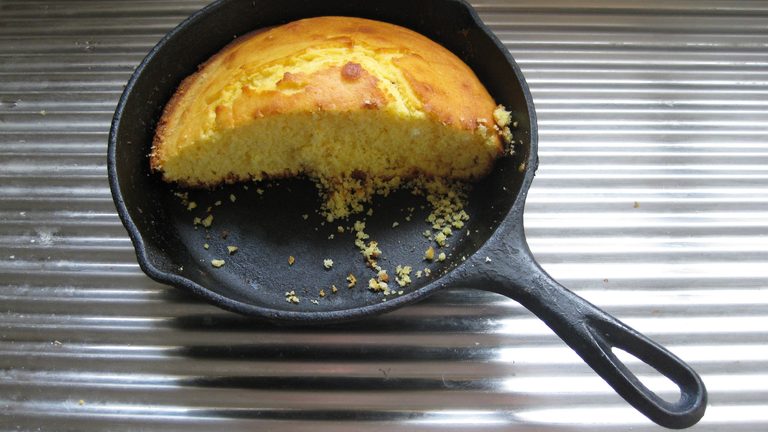
Cast iron is the pan many people inherit, and for good reason. It is very durable, holds heat well, and goes from stovetop to oven to campfire.2 A pan that looks hopeless at a garage sale can often be brought back. All it asks for is a few habits, and both university extension services agree on what they are.
What "seasoning" means
Seasoning is a coat of oil or shortening baked onto the iron. It conditions the pan so food does not stick, and it protects the metal.1 New pans are sometimes sold pre-seasoned, but every pan eventually needs to be seasoned again.1
The signs are easy to read: when the pan looks dry and discolored, or when food begins to stick, it is time to re-season.1
Everyday cleaning
The goal is to clean the pan without wearing away that protective layer:
- Clean it soon. Scrape and wipe the pan with a paper towel or cloth as soon as it has cooled.2
- Go gentle with soap. If you wash it, use a mild or diluted soap and a soft sponge or cloth. Harsh detergents and scrub pads wear off the coating.1
- No soaking, no dishwasher. Most cookware experts advise against soaking cast iron in soapy water, and it should never go in the dishwasher.12
- Dry it completely. Any moisture left on the pan can make it rust. Dry it with a towel, then set it on a hot burner for a moment to drive off the last of the water.12
- Oil it. Rub a thin layer of oil over the pan after drying.2
Store it in a dry place once it is clean.2
How to re-season in the oven
The University of Illinois Extension method:1
- Preheat the oven to 450°F.
- Rub a thin layer of cooking oil over the inside bottom and sides of the pan. You can coat the outside too.
- Place the pan upside down on a baking sheet lined with aluminum foil, on the bottom rack.
- Bake for one hour.
- Once the pan is cool enough to touch, wipe off any extra oil with a paper towel or soft cloth.
North Dakota State University Extension gives a similar range, a hot oven of 450 to 500°F for about an hour, with foil underneath to catch drips, and notes that an old pan may need a couple of rounds.2 Keep the layer of oil thin each time.
Rescuing a rusty pan
Rust is not the end. Scrub the rusty spots with coarse salt, or soak the pan briefly in vinegar, then wash it in soapy water, rinse it and dry it thoroughly before seasoning it again.2 The Illinois Extension simply says to scrub off the rust with a scrub pad, clean and dry the pan well, and re-season.1
Some pans are too far gone. NDSU's food and nutrition specialist jokes that those can become a rustic decoration on the wall.2
What to cook, and what to go easy on
Cast iron handles frying, roasting, slow cooking and even baking cornbread.2 The one thing it does not love is acid. Tomatoes and other acidic foods with a lot of moisture break down the seasoning, so a pan used for them needs re-seasoning more often.1 NDSU advises avoiding long, slow cooking of tomato-based dishes in seasoned cast iron.2
A last practical point: the handle gets very hot. Use two hands and a couple of hot pads to lift a cast iron pan out of the oven.2