How old is your cat in human years? A simple chart and calculator
The first two years of a cat's life count for about 24 human years, then each year adds about four. A calculator, the full chart and the six life stages of a cat.
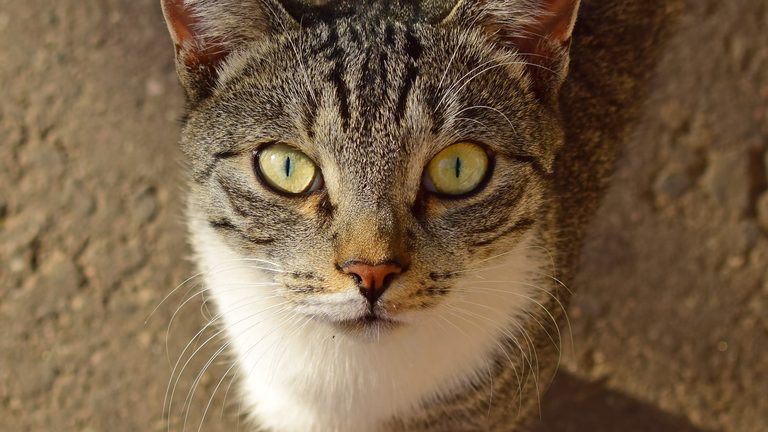
Cats grow up fast. A kitten that fits in your hand in spring is fully grown a year later, and that early sprint is why the old "multiply by seven" rule misses so badly. Cornell University's Feline Health Center calls the seven-year rule not entirely accurate.2 Feline experts use a curve instead: very fast at first, then steady.
Try it with your cat
The rule of thumb
International Cat Care, a feline welfare charity that works with veterinarians, puts it simply: the first two years of a cat's life equal 24 human years, and every year after that equals 4 human years.1
Cornell's version is very close. It describes a 1-year-old cat as physiologically similar to a 16-year-old person and a 2-year-old cat to a 21-year-old, with about four human years per cat year after that.2 The two charts differ by a few years at the start and agree on the pace afterward. Either way, the message is the same: the first year is a huge leap, and later years count about four times over.
Why bother converting at all? International Cat Care points out that cats are good at hiding discomfort, and that thinking of a cat's age in human terms helps owners understand its life stage and anticipate what it needs next.1 A 7-year-old cat that seems unchanged is, in human terms, well into middle age.
The full chart
These equivalents come from International Cat Care's table:1
| Cat's age | About this many human years |
|---|---|
| 1 month | 1 |
| 3 months | 4 |
| 6 months | 10 |
| 12 months | 15 |
| 18 months | 21 |
| 2 years | 24 |
| 4 years | 32 |
| 6 years | 40 |
| 8 years | 48 |
| 10 years | 56 |
| 12 years | 64 |
| 14 years | 72 |
| 16 years | 80 |
| 18 years | 88 |
| 20 years | 96 |
The six life stages of a cat
International Cat Care groups a cat's life into six stages:1
- Kitten, up to 6 months: growing fast and learning about the world. Meeting people and new experiences matters most now.
- Junior, 7 months to 2 years: the teenage years. Your cat reaches full size.
- Adult, 3 to 6 years: physically and behaviorally mature. Play and exercise keep body and mind busy.
- Mature, 7 to 10 years: comparable to people in their mid-40s to mid-50s, and usually a little less active.
- Senior, 11 to 14 years: often slower, and grateful for easier access to favorite spots.
- Super senior, 15 years and up: many cats reach this stage, some without showing their age at all.
Cats live on average about 12 to 14 years, and reaching the late teens or even the early twenties is not unusual.1
Small changes that help older cats
Knowing your cat's life stage helps you meet its needs. For senior cats, International Cat Care suggests practical adjustments such as a litter tray with lower sides and ramps to favorite sleeping spots for cats that no longer jump.1 Cornell notes that many cats begin to show age-related changes between 7 and 10 years old, and most do by age 12, while stressing that every cat ages in its own way.2
Curious how your dog compares? Dogs follow a different curve: see how old your dog is in human years.