Why do cats knead blankets and laps?
The rhythmic paw-pushing known as "making biscuits" starts in kittenhood. What kneading means, why your cat does it on you, and what to do about the claws.
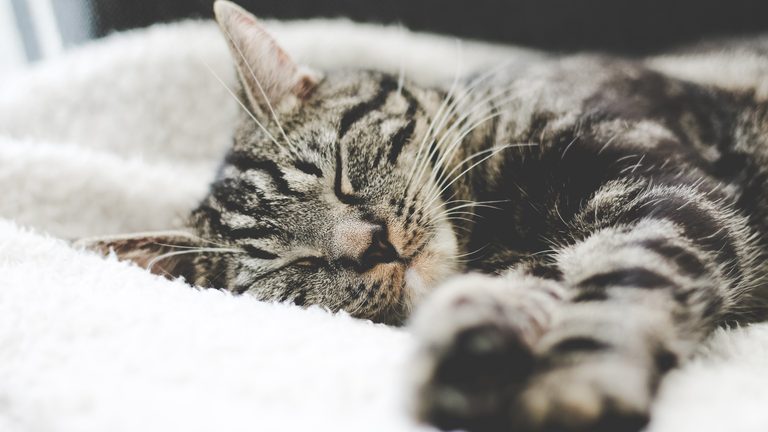
Your cat settles onto your lap, then starts pushing its front paws up and down, one after the other, sometimes purring loudly, sometimes with claws flexing into your jeans. Cat people call it "making biscuits." It looks a little strange, and it is one of the clearest signs of a contented cat.
It starts with nursing
Kittens knead their mother's belly with alternating front paws to stimulate the flow of milk.1 VCA Animal Hospitals explains that the pressure along the mother's mammary chain brings more milk down for the hungry kittens, and that kneading is also thought to stimulate oxytocin, a hormone involved in the bond between a mother cat and her kittens.2
Many cats outgrow the habit once they no longer need it, but some keep it into adulthood.1 VCA suggests that adult cats may be recreating the feel-good sensations of nursing, which is why a kneading cat is usually a comfortable, relaxed cat.2
Why your cat kneads you
International Cat Care puts it warmly: a cat kneading on your lap or chest is linking you with the comfort of its mother.1 Adult cats tend to keep kneading in the presence of someone they feel safe with, or on a fluffy cushion or blanket.1
VCA adds that cats do not usually knead animals or people they do not like. If your cat kneads on you, it likely feels relaxed around you.2 Some cats go one step further and drool as they knead, anticipating the milk that kneading once brought.1
Other reasons cats knead
Comfort is not the whole story. VCA lists a few more:2
- Making a bed. Wild ancestors had no cushions. Kneading may have helped them soften a spot to rest, and the instinct seems to have stayed with house cats.
- Marking territory. Cats have scent glands around their paws and claws, so kneading may be one of the ways a cat marks its bed, its blanket, or you.
- Showing affection to the people and animals in its household.
When kneading hurts
Claws plus enthusiasm can be painful, and hard on blankets and furniture. A few kind fixes:
- Keep claws trimmed short, which protects both skin and furniture.2
- Put a thick blanket on your lap before the cat settles in.
- Redirect the kneading to a designated soft spot, using treats and toys.2
What not to do: never punish a cat for kneading. International Cat Care stresses that kneading is perfectly normal behavior, and that punishment could damage your bond with your cat.1
When to take note
Kneading is almost always a sign of contentment. VCA notes one exception worth knowing: if a cat suddenly kneads much more than usual, or in odd places such as under the bed, it may be soothing itself because it is not at ease. Look at what else has changed, such as its appetite or how much it hides, and ask your vet if something seems off.2
Curious about another feline mystery? Our guide to your cat's age in human years explains why a 7-year-old cat is already in mid-life.