Kitchen conversions made easy: cups, spoons, ounces and grams
How many tablespoons in a cup, milliliters in a teaspoon, grams in an ounce? A converter, the standard kitchen equivalents and a recipe scaler that does the fractions for you.
A recipe from a British cookbook in grams, a handwritten family card in cups, an oven dial in Fahrenheit: most kitchens run on a mix of measuring systems. The National Institute of Standards and Technology (NIST), the U.S. agency in charge of measurement, publishes the equivalents home cooks need. The converter below uses the exact U.S. measures behind them.
Convert any amount
The equivalents worth memorizing
NIST lists these approximate equivalents for home cooking:1
| U.S. measure | Metric |
|---|---|
| 1/4 teaspoon | 1.25 mL |
| 1 teaspoon | 5 mL |
| 1 tablespoon (1/2 fluid ounce) | 15 mL |
| 1 fluid ounce | 30 mL |
| 1/4 cup | 60 mL |
| 1/3 cup | 80 mL |
| 1/2 cup | 120 mL |
| 1 cup | 240 mL |
| 2 cups (1 pint) | 480 mL |
| 4 cups (1 quart) | 950 mL |
| 1 ounce (by weight) | 28 g |
| 1 pound (16 ounces) | 454 g |
Two relationships carry most recipes: 3 teaspoons make a tablespoon, and 16 tablespoons make a cup. NIST's table also shows 2 tablespoons per fluid ounce and 8 fluid ounces per cup.1
Cups measure volume, grams measure weight
This is where conversions go wrong. A cup measures volume, a gram measures weight, and the link between them depends on the density of the ingredient:2 a cup of flour weighs far less than a cup of honey. U.S. recipes even use two different ounces, the fluid ounce for volume and the ounce for weight.2
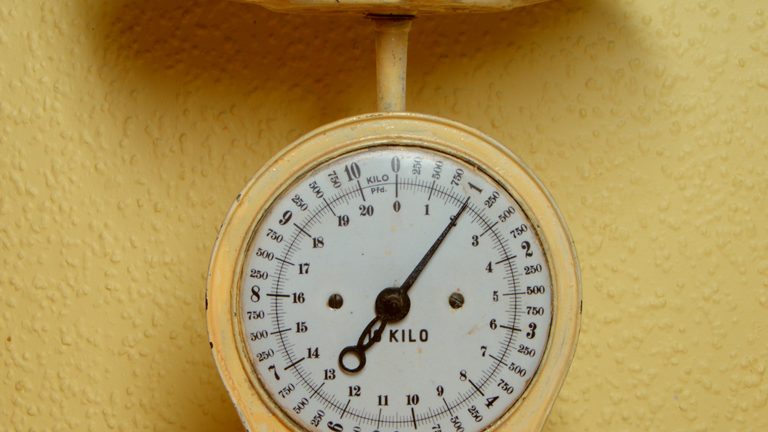
That is why NIST recommends weighing ingredients on a kitchen scale as a best practice for accuracy, instead of measuring them by volume.2 Its tip for converting a traditional American recipe: measure the ingredient with the usual cup or spoon, then weigh it in grams, and write that number down for next time.2 It also warns that customary measures such as cups and pints mean different things in different countries.2
A few habits make volume measuring more accurate, according to NIST:2
- use dry measuring cups for dry ingredients and liquid measuring cups for liquids;
- level off dry ingredients with a straight edge;
- read a liquid measuring cup on a flat surface, at eye level.
Oven temperatures
To turn Fahrenheit into Celsius, subtract 32 and multiply by 5/9; the converter above does it for you. Old recipes often skip numbers and say "moderate oven." NIST translates those terms:3
| Old recipe says | °F | °C |
|---|---|---|
| Slow | 300 to 325 | 150 to 160 |
| Moderate | 350 to 375 | 180 to 190 |
| Hot | 400 to 450 | 200 to 230 |
| Very hot | 450 to 500 | 230 to 260 |
NIST also notes that every oven runs a little differently, so an oven thermometer is a good investment.3
Scale a recipe up or down
Cooking for two from a recipe that serves six, or doubling a batch for guests? Paste the ingredient list below, and the scaler multiplies each amount and rounds it to fractions you can actually measure.
When you change a recipe a lot, weighing helps again: scaled grams are easier to measure than "1 1/3 cups plus 2 teaspoons."2 And if you bake at high altitude, NIST notes that baking, canning and candy making need their own adjustments there.2