Amaryllis: how to get big blooms indoors this winter
An amaryllis bulb planted now can flower in 6 to 8 weeks. How to choose the bulb, pot it, make the flowers last, and keep it going to bloom again next year.
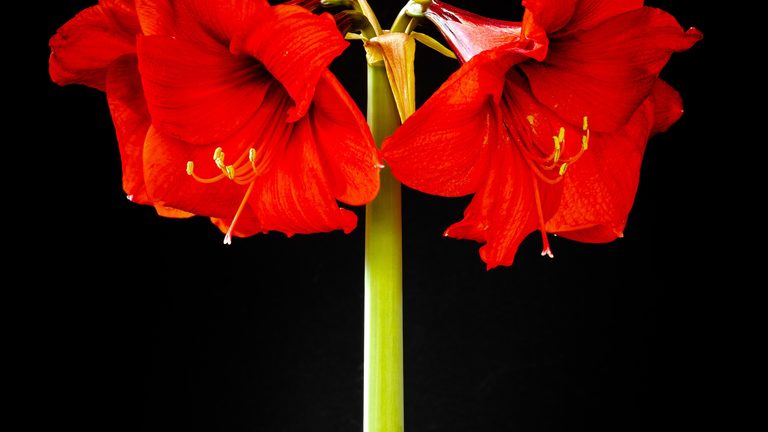
Few houseplants give as much for as little effort. A bare bulb in November becomes a tall stalk of trumpet-shaped flowers by the darkest weeks of winter. The University of Illinois Extension calls amaryllis relatively carefree, and both Illinois and Wisconsin extension horticulturists agree on how to get the most from one.12
Choosing a bulb
Size matters. Larger bulbs hold more stored energy, so they produce more flowers and usually thicker, stronger stems.12 Pick bulbs that are firm and dry, with no mold, decay or damage.12
The plant sold as amaryllis is actually a South American genus, Hippeastrum. The true Amaryllis, or belladonna lily, comes from South Africa.2 The flowers come in red, pink, salmon, white, apricot and bicolor, and can reach 6 to 10 inches long.2
Planting
- Pot: about 1 inch wider than the bulb, with drainage holes. Amaryllis like to be slightly pot-bound.12
- Depth: leave at least the top third of the bulb above the soil, according to Illinois Extension; Wisconsin says the top half.12
- Soil: a well-draining potting mix, with about an inch of space below the rim so water does not spill.12
- First watering: water thoroughly and let the extra drain away, in a sink if possible.1
Getting it to flower
Put the pot in a sunny spot at room temperature, 65 to 70°F.2 Keep the soil moist but never soggy: wait until the top two inches feel dry before watering again.1 Wet soil can rot the bulb, and too much heat tends to produce weak stalks and smaller flowers.2
The bulb should send up a flower stalk in a few weeks and usually blooms 6 to 8 weeks after planting.2
Making the flowers last
Once the buds show color, move the plant out of direct sunlight to a cooler spot.1 Wisconsin Extension suggests 60 to 65°F to prolong the bloom period.2 As each flower fades, remove it before it can form seeds, which drain the bulb's energy.12
Blooming again next year
Many people throw the bulb away, but it can flower again:1
- Cut off faded flowers, but leave the stalk until it yellows and keep the leaves: they make the food the bulb stores for next year.
- Keep the plant in a bright window, ideally facing south, water regularly and feed it monthly with a houseplant fertilizer.
- Once frost danger has passed, it can spend the summer outdoors, moved gradually into at least six hours of sun. Bring it in before the first fall frost.
- To choose when it blooms, give it a rest: about 8 to 12 weeks in a cool (45 to 55°F), dark place, without water. Remove the leaves once they yellow.
- When new growth appears, or when you water it again and return it to a warm, sunny window, flowers usually follow 4 to 6 weeks later.
A rest period is not strictly required, but it is how you control the timing.12 Because the bulbs keep growing wider, plan to repot every few years, ideally after a rest.2
What about waxed bulbs?
Waxed amaryllis bulbs need no soil or water, which makes them easy gifts. They are usually meant to be thrown away after flowering. If you remove the wax and the wire and the bulb is still firm, Illinois Extension says it can be planted and cared for like any other amaryllis.1
Another winter favorite works on a similar principle of light and cool nights: see how to make a Christmas cactus bloom again.