Which birds visit backyard feeders in winter, and what they eat
Cardinals, chickadees, juncos and goldfinches all come to winter feeders, but not for the same food. A guide to the seeds and feeders each bird prefers, from the Cornell Lab.
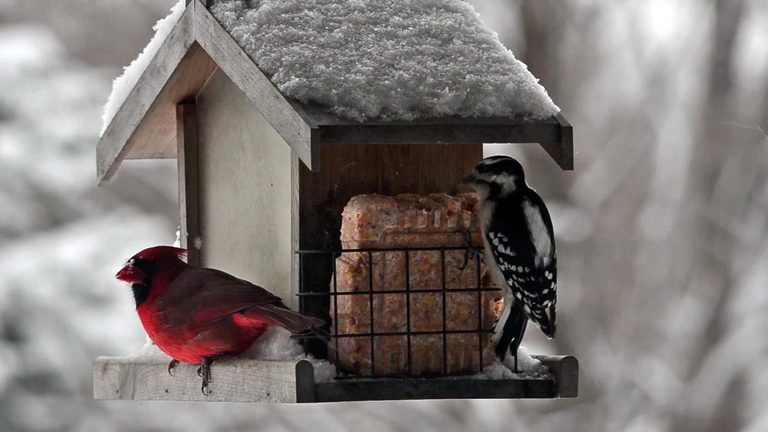
Winter is the best season for watching birds from the kitchen window. Natural food is scarce, and a well-stocked feeder becomes a busy place. Project FeederWatch, a winter bird survey run by the Cornell Lab of Ornithology and Birds Canada, notes that supplemental feeding can help birds through periods of scarcity such as harsh winters.1 What you put out decides who shows up.
The one seed most birds love
The most common seed offered at feeders in North America is black-oil sunflower seed. It is small, high in energy and thin-shelled, which makes it a favorite of a wide variety of birds.1 Cardinals, chickadees, finches and sparrows all count it among their favorite feeder foods, and woodpeckers eat it on occasion.1
Hulled sunflower seed, sold as "no mess," draws the same birds and leaves less debris under the feeder, but it spoils faster, so keep it dry.1
Who eats what
FeederWatch's guide to food types makes it easy to match a menu to your visitors:1
| Food | Birds it attracts |
|---|---|
| Black-oil sunflower | Cardinals, chickadees, finches, sparrows |
| Millet, scattered on the ground | Juncos and sparrows |
| Nyjer ("thistle") | American goldfinches, pine siskins, redpolls |
| Peanuts and peanut hearts | Chickadees, titmice, nuthatches, jays |
| Safflower | Cardinals and other big-billed birds |
| Suet | Woodpeckers, nuthatches, chickadees and other insect eaters |
| Mealworms | Chickadees, titmice, wrens, nuthatches, and bluebirds |
| Fruit | Robins, bluebirds, mockingbirds, catbirds, waxwings |
FeederWatch's interactive guide to common feeder birds lets you filter species by winter region, food type and feeder type, and shows what each bird prefers.2
Picking a feeder
The feeder matters as much as the seed:1
- Small tube feeders keep seed fairly dry. Short perches suit small birds such as finches and discourage grackles and jays.
- Small hoppers protect seed from the weather and also favor smaller birds.
- Nyjer needs a feeder with very small ports, otherwise the tiny seed spills. Offer it on its own rather than in a mix.
- Suet cages that are open only at the bottom let woodpeckers, nuthatches and chickadees feed hanging upside down while discouraging starlings.
Juncos and many sparrows feed on the ground. A handful of millet sprinkled below the feeder, or on a platform, keeps them happy.1
What to skip
Cheap seed mixes are often padded with milo, a reddish grain most birds do not like. Western birds eat it more readily than eastern ones; in the East, FeederWatch suggests avoiding mixes with a lot of milo.1 If you offer peanuts, choose raw or plain roasted ones, never salted or flavored.1 Throw out any fruit or peanuts that turn moldy.1
A few winter tips
- Watch for grackles and jays crowding out small birds: smaller feeders with short perches help.1
- Put out fruit such as orange halves or unpreserved raisins to tempt birds that rarely visit seed feeders.1
- Count your visitors. Project FeederWatch invites anyone to record the birds at their feeders during the winter, and those counts feed scientific research.1