Why leaves change color in the fall
Fall color is mostly chemistry. How chlorophyll fades, why yellow and orange were there all along, where red comes from, and what weather makes the brightest display.
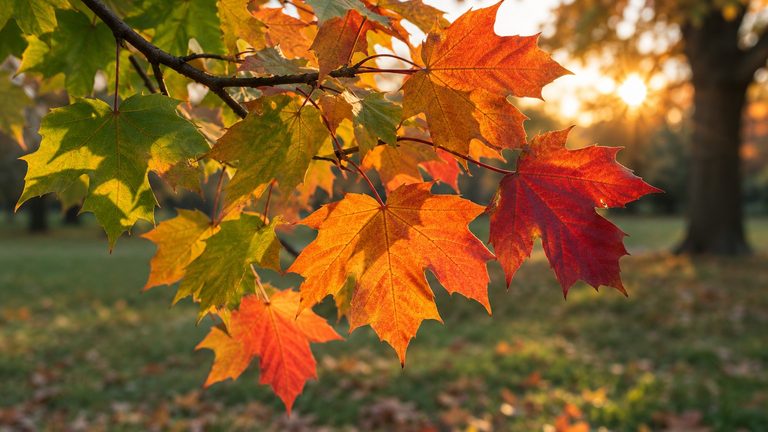
A tree does not paint its leaves for show. Every color you see in October is the result of a tree shutting down a food factory and packing up its supplies for winter. Understanding the steps explains why some years are spectacular and others are dull.
The green that hides everything else
Washington State University Extension explains that chlorophyll is the pigment that makes leaves look green and powers photosynthesis. It is also broken down by bright sunlight, so a leaf has to keep replacing it, which takes warmth and light.1 All summer there is so much chlorophyll that it covers the other pigments.
Yellow and orange were there all along
Carotenoids are the yellow and orange pigments. According to WSU Extension, they are present in the leaf from the bud stage to the fall but masked by the larger amount of chlorophyll, and they also protect the leaf from harmful by-products of photosynthesis.1 The University of Wisconsin-Madison Extension adds that they show only once chlorophyll is very low.2
What starts the change
The main signal is night length. WSU Extension names the increasing length of the cool nights of fall as the environmental factor with the most influence on color change.1 As daylight shortens, a corky abscission layer swells at the point where the leaf stem meets the branch. It narrows the veins that carried water in and sugar out, and chlorophyll is no longer replaced.1
Wisconsin's horticulturists describe the same sequence from the tree's side: shorter days and cooler temperatures prompt plants to take apart the photosynthetic machinery in the leaves and move nutrients such as nitrogen and phosphorus to the stems and roots for storage. Most of this happens before any color change is visible.2
Where red comes from
Reds are different in kind. Leaves that turn red generally need a high concentration of sugar and light to make anthocyanins, according to WSU, which is why the pigment is built as the season turns.1 Wisconsin Extension notes that plants make anthocyanins partway through chlorophyll breakdown, so leaves can look dark burgundy at first, and that the pigment helps shade the photosynthetic system from bright light.2
WSU also notes that adding anthocyanins late in the leaf's life gives some frost protection, letting the leaf stay on longer so the tree can move more nutrients out of it.1 Browns come from tannins, which WSU says give leaves their golden color and ultimately the brown of late fall.1
What makes a bright year
Wisconsin Extension calls weather the most important factor: cool, sunny weather gives the brightest foliage colors.2 The details:
- Cool, sunny days give the brightest colors.2
- Very warm temperatures speed up leaf processes, shorten the time colorful leaves stay on the tree and reduce red pigments.2
- Hard freezes can damage leaves before the best colors develop.2
- Dry weather raises the sugar concentration in the sap, which suits anthocyanin production.1
- Spring and summer matter too: WSU lists a warm wet spring, ideal summer weather, sunny fall days and cool nights as the combination for the most brilliant color.1
Position on the tree matters as well. Wisconsin notes that anthocyanins shade the leaf's photosynthetic system from bright light, which is why sun-exposed leaves are the reddest.2
Why no two autumns match
Because the weather changes every year, so does the display. WSU Extension points out that the variety of weather conditions each year results in no two autumn displays being alike.1 Drought, nutrient shortages and disease can also raise red pigment, but Wisconsin Extension notes that drought severe enough to kill leaves before autumn is rare.2
What happens to the leaves next
Once the abscission layer is fully sealed, the corky material begins to break down and the leaf falls.1 After that, the fallen leaves become a resource in the garden. Our guide to what to do with fallen leaves covers mowing, mulching and composting them, and the article on how trees survive winter follows the story from the tree's point of view. If you want to identify trees after the color is gone, see winter tree identification by bark.