The best bird seed for winter feeders
Black-oil sunflower is the one seed almost every feeder bird eats. How safflower, nyjer, millet, suet and peanuts compare, according to the Cornell Lab of Ornithology.
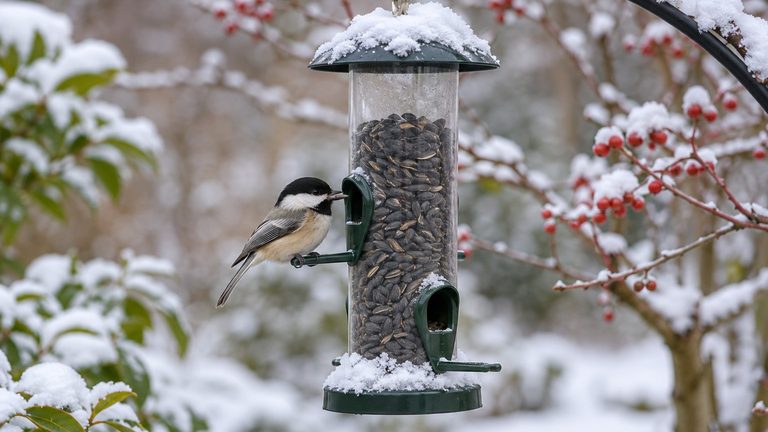
Walk down a bird food aisle and you will find a dozen mixes in cheerful bags. Many cheap mixes lean on fillers such as milo that few birds want. If you only buy one thing, buy black-oil sunflower, and add extras for the birds you want to see.
Start with black-oil sunflower
Project FeederWatch, run by the Cornell Lab of Ornithology, says black-oil sunflower is the most common seed offered at feeders in North America. It is a small sunflower seed that is high in energy and has thin shells.12 Cardinals, chickadees, finches and sparrows are among its favorite users, and woodpeckers eat it occasionally.12
Cornell's BirdSleuth seed-preference chart, based in part on the 1995 to 1996 FeederWatch Seed Preference Test, backs that up. Black-oil sunflower, along with shelled sunflower, is marked for every bird group on the chart, and no other seed is: chickadees, nuthatches, finches, cardinals and grosbeaks, sparrows and blackbirds, jays, woodpeckers, titmice, and pigeons and doves.3 That is why one seed can fill a feeder and still bring variety.
How the other seeds compare
Most of these reach a narrower group than sunflower, and the two Cornell sources describe the audience in slightly different terms.
| Seed | Who it attracts | Notes |
|---|---|---|
| Hulled sunflower | Any bird that eats sunflower1; all nine bird groups on the poster3 | Less mess under the feeder, but spoils faster; keep it dry |
| Safflower | Cardinals and other big-billed birds1; also nuthatches, finches and titmice3 | Most birds prefer sunflower |
| Nyjer | American Goldfinch, Pine Siskin, Common Redpoll1; finches3 | Needs a special feeder with very small ports |
| Millet | Juncos, sparrows and other ground feeders1; also finches, doves and pigeons3 | Scatter on the ground or a platform |
| Cracked corn | Doves, quail, sparrows1; jays too3 | Works mixed with millet on the ground |
| Peanuts | Jays, chickadees, nuthatches, titmice1; woodpeckers too3 | Smaller birds do better with shelled peanuts or peanut hearts |
| Suet | Insect-eating birds1; chickadees, nuthatches, jays, woodpeckers, titmice3 | Most is beef kidney fat |
The BirdSleuth poster also lists striped sunflower, which it marks for cardinals and grosbeaks and for jays.3
What to skip
FeederWatch says milo is common in cheap mixes but is not favored by most birds, so it often goes to waste, and it suggests avoiding mixes with a lot of it in the East.1 The poster shows milo appealing only to jays and to pigeons and doves.3 Reading the ingredient list before you buy a mix is worth the minute.
Shell-on or hulled?
Black-oil seed comes in the shell, so some hulls will fall under the feeder. Project FeederWatch's alternative is hulled sunflower: with the shells removed there is less mess, and any bird that eats sunflower will eat it, but it spoils faster, so it must stay dry.1 The BirdSleuth chart marks shelled sunflower for the same nine bird groups as black-oil.3 The choice comes down to whether you would rather sweep up hulls or refill more often.
Match the seed to the bird
If you want to see a particular bird, choose the seed rather than the mix:
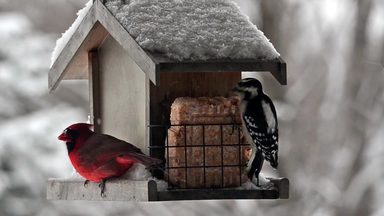
- Cardinals: black-oil sunflower and safflower.12 Our profile of northern cardinals in winter explains why they are a feeder regular.
- Goldfinches and siskins: nyjer in a feeder with very small ports, offered alone to reduce waste.1
- Juncos and sparrows: millet scattered on the ground or on a platform.1 For the ground-feeding regulars, see dark-eyed juncos.
- Chickadees, nuthatches and titmice: black-oil sunflower, suet or peanuts.13
Keep the feeder going
Quality matters as much as type. Project FeederWatch says peanuts should be unsalted and unflavored, and moldy ones thrown out.1 Suet is mostly beef kidney fat and can turn rancid in hot weather unless specially processed, so it is best offered in the cold months.1
Seed is only half of winter feeding. Birds also need water, and our guide to a birdbath in winter covers it. For a sense of who to expect at the feeder, see winter birds at backyard feeders, and for natural food, red berries for winter birds shows which shrubs to plant.