Houseplants that do well in low light
Snake plant, ZZ plant, pothos, peace lily and others that tolerate dim rooms. What extension horticulturists mean by low light and how to water these plants in winter.
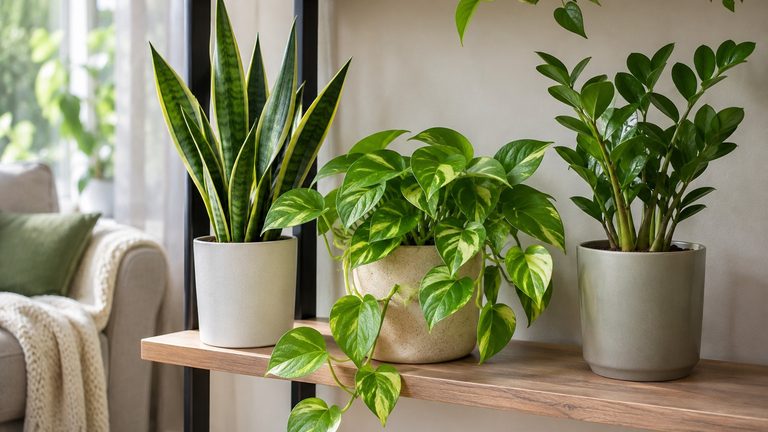
A dim room does not have to stay bare. The trick is matching the plant to the light you actually have, and then adjusting your watering to a plant that is growing slowly. Low-light plants need different care than sun lovers.
What "low light" really means
The University of Illinois Extension defines low-light spots as areas near an east- or north-facing window, or several feet from a window with no direct light. Shade from large trees, porches, overhangs, window coverings and nearby buildings can create the same conditions.1 University of Maryland Extension describes the light near a north-facing window as "medium to low."2
Low light is not no light. Illinois Extension lists signs that a plant is not getting enough: legginess or stretching, a pale greenish-yellow color, or leaf drop. Slow growth can make it hard to tell quickly whether light is adequate.1
The most forgiving plants
Snake plant (Sansevieria). Illinois Extension says it tolerates neglect, grows in very little natural light and also does well in bright rooms. It typically reaches 3 to 4 feet, depending on cultivar.1 Maryland Extension notes it comes as a tall upright type or a dwarf rosette only a few inches tall.2
ZZ plant (Zamioculcas zamiifolia). Very easy to grow, with dark, glossy foliage. Illinois Extension says it grows best in low, indirect light, and that fluorescent lighting works if a room has little or no natural light. Water when dry, on average every 2 to 3 weeks.1
Pothos and philodendron. Maryland Extension says the philodendron vine prefers bright light but tolerates low light, and is often used in offices because it does well under fluorescent lights. Pinch the tips to encourage compact growth.2 Pothos is related and also called devil's ivy; its yellow or off-white variegation fades to green in very low light.2
Peace lily (Spathiphyllum). Grows 2 to 4 feet tall indoors with glossy dark green leaves, and is one of the few plants that flowers in low light, according to Maryland Extension.2
Chinese evergreen (Aglaonema). Silver or light gray-green markings on the leaves. Maryland Extension says older plants develop tall stems that should be cut back to keep them compact.2
Dracaena (Dracaena fragrans 'Warneckei'). Most are under 4 feet, though some reach 8 feet, with striped or patterned foliage. It tolerates lower light but thrives in bright light.2
Bamboo palm (Chamaedorea seifrizii). An exception among tropical palms, which usually need bright light. Illinois Extension gives 65 to 75°F, high humidity with weekly misting, and moist soil that is watered when the top inch is dry.1
Illinois Extension also lists peperomia, prayer plant, staghorn ferns, spiderwort, cast iron plant and spider plant as other low-light options.1
The low-light plants side by side
| Plant | Water habit | Notable trait |
|---|---|---|
| Snake plant | Let soil dry completely between waterings1 | Tolerates very little light1 |
| ZZ plant | About every 2 to 3 weeks when dry1 | Glossy dark leaves1 |
| Peace lily | Needs more water than most; wilts quickly when dry2 | Flowers in low light2 |
| Dracaena | Prefers drier soil2 | Striped foliage2 |
| Bamboo palm | Water when the top inch is dry1 | Tolerates low light, unlike most tropical palms1 |
Watering plants that grow slowly
Plants in less light need less water, and Maryland Extension notes that watering should change with the seasons, since all houseplants use less water in winter.2 Illinois Extension makes the same connection: low-light plants grow more slowly and need less water.1 Check the soil before you water rather than following a fixed calendar. Our guide to watering houseplants in winter goes deeper on the routine.
If a plant must live in a dim spot
Maryland Extension gives a tip for plants that bloom or variegate: if a plant has to sit in a dim spot, keep it in brighter light most of the time and move it to the dim spot for no more than a couple of weeks.2 That works for a table centerpiece, less so for a permanent corner.
African violets can be supplemented with fluorescent lights, according to the same source.2 For more color indoors, see the Christmas cactus guide, and for plants that prefer more sun, the succulents winter care guide.