What to do with fallen leaves: mulch, compost or leave them
Fallen leaves can feed the lawn, mulch garden beds or become compost. What extension services say about how much to mow in, how deep to spread, and when to rake.
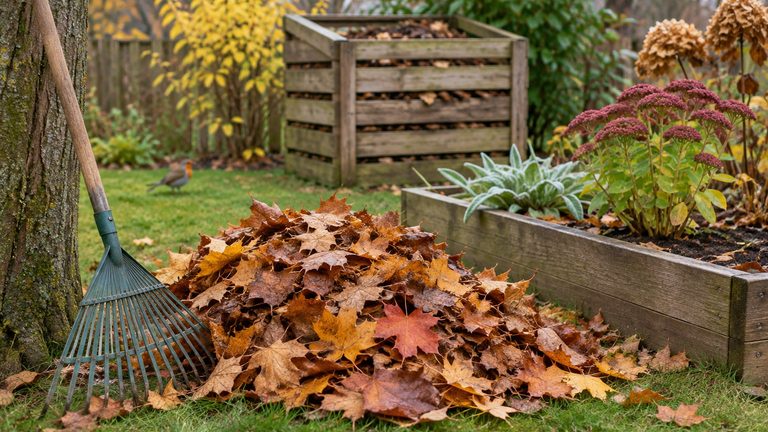
Bagging leaves for the curb is a habit, not a requirement. Extension services have been telling gardeners for years that the leaves already in the yard hold nutrients the trees took up all season. The question is only where to put them.
What leaves are worth
The University of Illinois Extension states that leaves contain 50 to 80 percent of the nutrients a plant extracts from soil and air during the season, and that they should be managed and used rather than bagged or burned.2 UConn Extension puts numbers on the lawn benefit: mulching a 2-inch layer of leaves into turf over a fall adds about 150 pounds of nitrogen, 20 pounds of phosphorus and 65 pounds of potassium per acre.1 On a mature lawn that does not need fast recovery from traffic, that may allow you to reduce or skip fall fertilizer.1
Option 1: mow them into the lawn
Mulch mowing chops leaves small enough to settle between the grass blades. UConn gives clear limits:1
- Leaves should cover no more than 20 percent of the lawn after each mulching event.
- A mulching mower can finely chop up to 6 inches of leaves at once. A standard mower works with the deck at its highest setting and several crisscross passes.
- Remove no more than one third of the grass blade in a single mowing, and mow when the turf is dry.
- Expect to mow more often in fall.
A thick layer left over winter can encourage snow mold, which may thin or kill turf. Leaves left in spring also slow green-up, so UConn recommends an early spring cleanup.1 UConn also notes that ash and maple leaves are harder to mulch than oak leaves.1
Option 2: mulch garden beds
Shredded leaves are a good substitute for purchased mulch. The University of Illinois Extension notes that mowed or shredded leaves decompose faster than whole leaves and are much more likely to stay in place.2 The author collects hers with a chipper shredder vacuum for use in her beds.2
UConn suggests spreading leaves in a layer 4 to 6 inches deep, keeping a 6-inch circle clear around the crown of each plant.1 Leaves can be shredded or left whole. Whole leaves can protect beneficial insects that overwinter in leaf litter, while a heavy bed mulch can attract voles and other burrowing pests.1
Illinois Extension also describes tilling a 6 to 8 inch layer of leaves into garden soil in fall. In heavy clay that improves aeration and drainage, and in light sandy soil it improves water and nutrient holding capacity. Working leaves in during fall gives them time to decompose before spring planting, and a little fertilizer speeds the process.2
Option 3: make compost
Leaves are high in carbon and low in nitrogen, about 2 percent nitrogen according to UConn, and the fragments break down quickly, especially when mixed with grass clippings.1 The extension recommendation is to combine green and dry brown plant materials, or to pile leaves in an out-of-the-way spot and let them break down over time.1 The result, as Illinois Extension describes it, is dark, crumbly, earth-smelling organic matter that anyone with a garden, lawn, trees, shrubs, planter boxes or houseplants can use.2 Our article on composting in winter covers how to keep a pile going as temperatures drop.
When to bag instead
Mulching is not always the answer. UConn lists cases where leaves should go:1
- Leaf litter can shelter overwintering insects, disease pathogens and weed seeds. If problems recur, bag the leaves and dispose of them.
- Jumping worms can spread when infested leaves are moved between areas or added to compost, so do not move infested leaves into uninfested areas.
- Follow local municipal yard waste rules for curbside collection.
Leave some for wildlife
Not every leaf needs a job. UConn notes that whole leaves protect beneficial insects overwintering in leaf litter, so a corner of undisturbed leaves under shrubs is useful.1 For the birds that visit once the garden goes quiet, see winter birds at backyard feeders. And if you are wondering where all that color came from, why leaves change color in the fall explains it.