How to store apples so they stay crisp
Cold, a little humidity and distance from other produce keep apples crisp. What extension specialists say about the fridge, the bag, ethylene and the countertop.
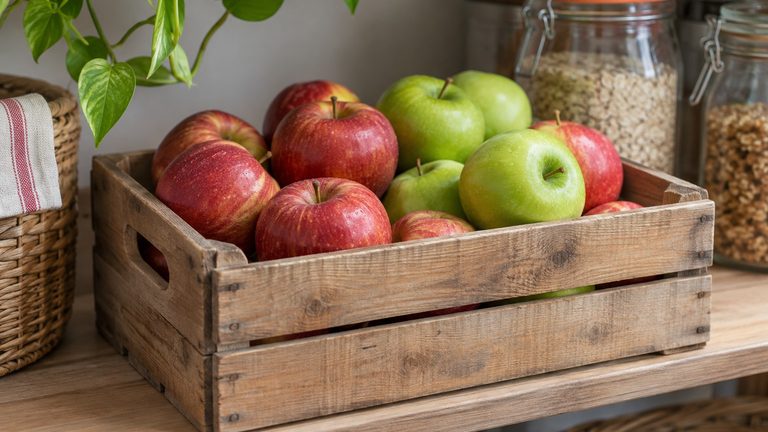
A crisp apple is easy to lose. Extension specialists point to three things that decide how well apples hold their texture at home: temperature, moisture, and what else shares the space. None of it needs special equipment.
Cold is the default
The University of California Master Food Preserver Program says apples keep best in the refrigerator, in the crisper drawer or in an unsealed plastic bag.3 Leaving them out longer than a few days lowers their quality, and the page notes that longer exposure on the counter leads to shriveling and a loss of flavor and crispness.3
Purdue University Extension's storage table lists apples at 30 to 40°F (-1 to 4°C), with a freezing point of 29.3°F (-1.5°C).1 A refrigerator is the easiest place in most homes to get that kind of cold. Penn State adds that low temperatures also reduce an apple's sensitivity to ethylene, and that it is best to store apples in the refrigerator unless they are under-ripe.2
Humidity and the bag
Moisture is the second piece. Purdue's table lists 90% relative humidity for apples, and its advice for holding moisture is to use polyethylene bags with several 1/4- to 3/8-inch holes for ventilation, adding more holes if moisture collects inside.1
That explains the University of California advice for an unsealed bag or the crisper drawer: either keeps moisture in while letting some air move.3 Purdue's advice to add holes when moisture collects inside the bag points the same way: a tightly sealed bag with no vent holds too much moisture, so poke holes in it or leave the top open.1
Keep apples apart from other produce
One cause of soft apples is their neighbors. Penn State explains that most tree fruits, particularly apples and pears, produce large amounts of ethylene, a ripening gas. Apples are sensitive to it too: prolonged exposure to ethylene turns apples mealy or less crisp.2
The practical fix, from Penn State, is to bag high-ethylene items such as apples and store them in a separate crisper from ethylene-sensitive produce, which goes in paper bags rolled shut in its own crisper.2 The University of California page says the same thing from the other side: apples give off small amounts of ethylene that can harm lettuce and other produce, so keep them apart.3 Purdue recommends storing fruit, particularly apples and pears, in a separate area from vegetables.1
Smell matters too. Purdue notes that apples can absorb odors from potatoes and turnips.1
Counter, crate or cellar
A few days in an open container on the counter is fine for apples you plan to eat soon.3 For a larger harvest, Purdue describes cool storage in standard apple boxes with smooth interior surfaces, and says winter apples can be kept in cone-shaped pits or cellars, though fruit and vegetables should never share the same pit.1 Its advice for a storage room is to keep the air cool and to close the ventilators when the outdoor air is warmer than the storage area.1 The principle is the same as in the refrigerator: cold, steady conditions, with apples kept apart from vegetables.
Storage checklist
| Do | Skip |
|---|---|
| Refrigerate in the crisper or an unsealed or perforated bag | Seal them in an unvented bag |
| Give apples their own drawer or bag | Share a drawer with lettuce, potatoes or turnips |
| Choose firm fruit without bruises or skin breaks | Store bruised or damaged apples with good ones |
| Keep any countertop stay to a few days | Leave them in a fruit bowl for weeks |
Choosing apples that store well
Quality at the start sets the limit. The University of California advises picking firm apples and avoiding fruit with bruises or skin breaks.3 Purdue agrees that only fresh, undamaged fruit should be stored.1 If you pick apples from your own tree, the University of California notes that pulling them off can tear the stem and tissue and shorten storage life, so avoid pulling them off the branch.3
Related storage guides
The guide to keeping fresh herbs longer and the guide to storing winter squash cover other produce that does best with the same attention to cold, moisture and spacing, and the guide to storing fresh cranberries is worth a look as the holiday baking season starts.